
Sacramento Public Records Database
Sacramento public records are maintained by city, county, and state agencies serving California's capital. You can search court cases, vital certificates, property documents, business filings, and city records through different systems. The City of Sacramento keeps official city documents through the City Clerk and accepts California Public Records Act requests through NextRequest. Sacramento County Clerk-Recorder handles vital records like birth and death certificates plus property documents. The Superior Court maintains case files for civil, criminal, family law, probate, and small claims matters. Most searches start online. Some records need an office visit or written request. Processing times range from instant searches to weeks for certified copies by mail.
Sacramento Quick Facts
Sacramento County Records
Sacramento sits in Sacramento County. The county handles vital records, property documents, and court cases. The Sacramento County Clerk-Recorder issues birth, death, and marriage certificates for events in the county. They also record property deeds, mortgages, liens, and other real estate instruments. The main office is at 600 8th Street in downtown Sacramento with branch locations throughout the county.
Birth, death, and marriage certificates cost $24 per copy as of January 2026 under Assembly Bill 64. You must prove your relationship to get vital records. Parents, spouses, adult children, grandparents, and legal representatives can order copies under Health and Safety Code Section 103526(c). Bring valid photo ID when you apply. Processing takes a few days to several weeks depending on how you order.
The county website at ccr.saccounty.gov provides online services for some records. You can search property information and order copies of recorded documents. Vital records can be ordered online through approved vendors or in person at county offices. Check the website for current fees and processing times.
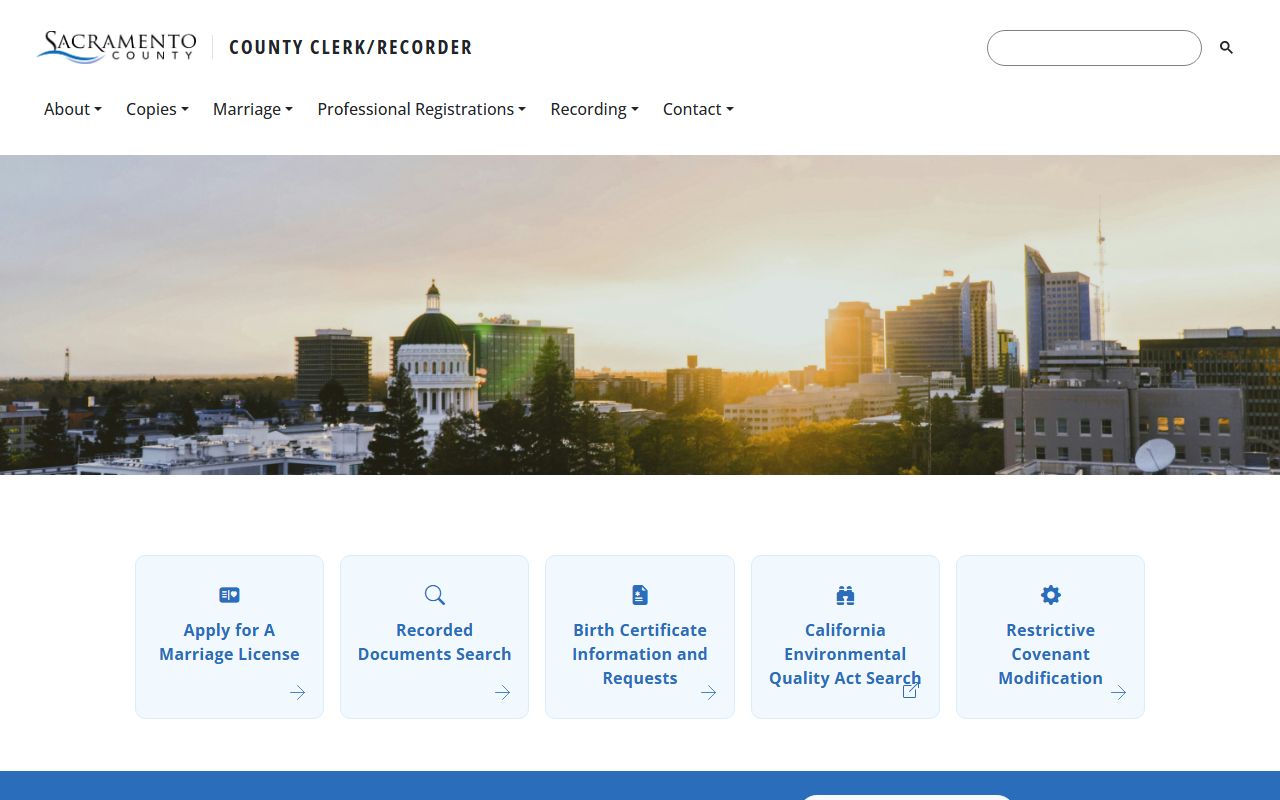
For full details on county services and offices, see the Sacramento County page.
Superior Court Case Files
The Superior Court of California, County of Sacramento, maintains case records for all trial court matters in the county. This includes civil, criminal, family law, probate, and small claims cases. The court operates multiple facilities serving different areas. Each courthouse keeps files for cases filed there.
Court records access is governed by state law. Civil cases are mostly public. Criminal cases show basic information but protect victim privacy. Family law cases hide sensitive financial and child information. Juvenile cases are confidential. You can search case indexes online. Full documents require a courthouse visit or mail order in most cases.
The court website provides online services for case searches. Look up cases by party name, case number, or attorney. The system shows filing dates, case types, courthouse locations, and hearing dates. Some documents are available online through remote access. Others require visiting the courthouse in person.
To get copies of court documents, visit the clerk's office at the courthouse handling the case. Bring the case number and document description. Standard copies cost $0.50 per page. Certified copies have an additional certification fee. Some documents can be ordered by mail if you provide complete information and prepayment. Processing by mail takes longer than visiting in person.
Court clerks can help you locate files and explain procedures. They cannot give legal advice or tell you what forms to file. If you need legal help, consult an attorney or contact legal aid organizations serving Sacramento County.
City of Sacramento Documents
The City of Sacramento keeps separate records from the county. The City Clerk maintains official city documents, ordinances, resolutions, and City Council proceedings. This office handles city elections, business licenses, and official records requests. City records include legislation, contracts, permits, meeting minutes, and administrative files.
Sacramento uses NextRequest for public records requests under the California Public Records Act. Visit cityofsacramentoca.nextrequest.com to submit a request or track existing ones. The portal lets you search past requests and responses. Many common records are already posted for download.
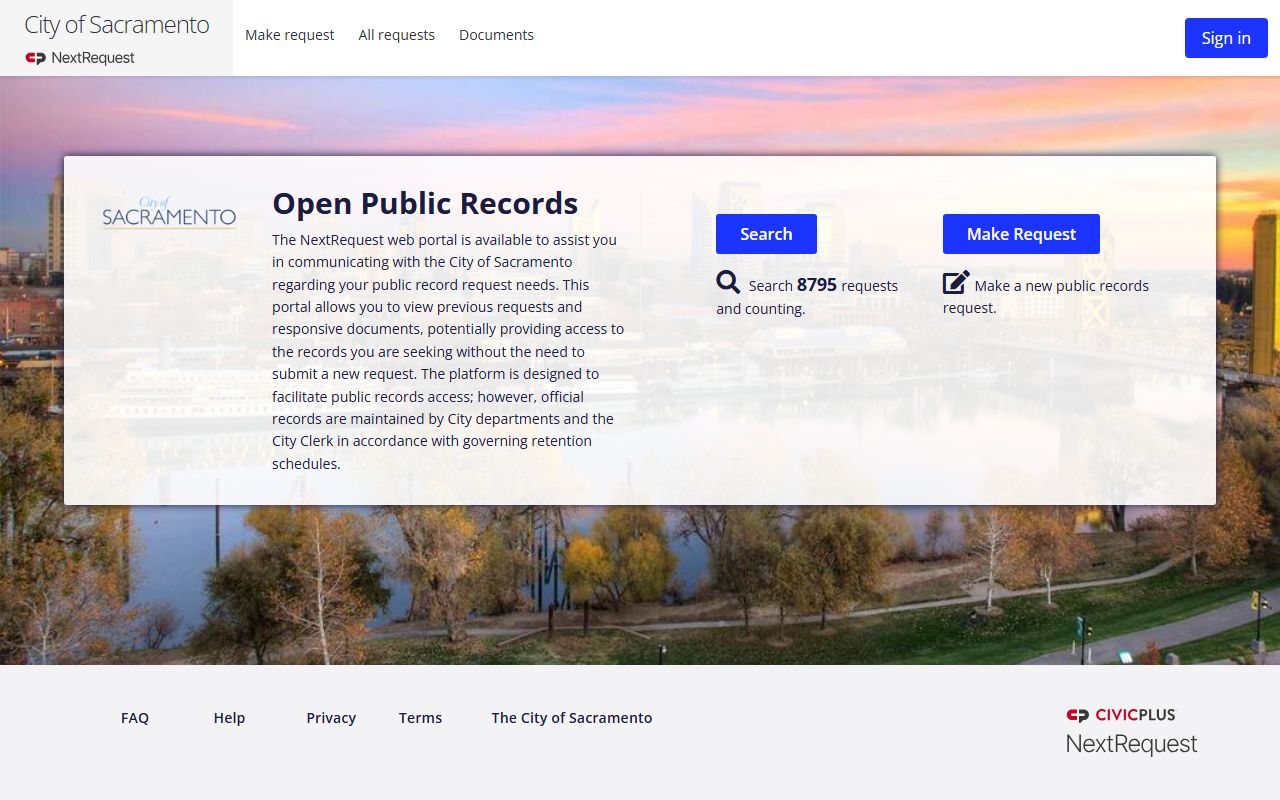
City departments have 10 calendar days to respond to your CPRA request. They can extend this by 14 days in unusual circumstances. Be clear about what records you want. Include dates and specific departments if you know them. The city does not create new records or answer questions. They only provide documents that already exist.
Most electronic records are free. Paper copies may have a per-page fee. The city will tell you about costs before processing large requests. You do not need to give a reason or show ID for most public records. Some records have exemptions for privacy, pending litigation, or law enforcement purposes. The city must justify any denial with specific legal authority.
Business Entity Searches
Business records for Sacramento companies are spread across multiple agencies. State-level entities like corporations and LLCs file with the California Secretary of State. You can search at sos.ca.gov/business-programs/business-entities to find any California business. The database shows entity name, number, status, formation date, and agent information. Searching is free. Certified copies cost $5.
Fictitious business names are filed with Sacramento County. If a company operates under a DBA, it must register with the County Clerk. These records are searchable through the Clerk-Recorder office. Call or visit to ask about fictitious name searches and copies. Fees apply for certified documents.
City business licenses are handled by the City of Sacramento. Every business operating in Sacramento must have a city license. You can verify a license through the city website or by calling the appropriate department. License records show business name, address, type, and status. Some information may be public while other details are protected under privacy laws.
The Secretary of State also maintains UCC financing statements showing secured interests in business assets. Search UCC records online through the state website. This helps when researching liens on business property or equipment.
Property and Real Estate Records
Real estate documents are recorded with the Sacramento County Recorder. Deeds, mortgages, liens, easements, and other property instruments are kept here. The Recorder maintains an index of all recorded documents going back decades. You can search online and order copies for a fee.
The County Assessor keeps separate records about property values for tax purposes. Assessor data includes owner name, assessed value, property characteristics, and tax history. This information is public and searchable online. The Assessor's parcel maps show property boundaries and parcel numbers.
To search property records, visit the county website or use the Assessor's online portal. Enter an address or parcel number to pull up information. You can view records on screen for free. Copies have per-page fees. Certified copies cost extra. Most documents can be emailed or mailed to you. Processing times depend on request volume and document complexity.
Building permits and code enforcement records are maintained by the City of Sacramento. These show permit history, inspections, and violations. Check with the city's Community Development Department for access to permit records and inspection reports.
State of California Records
Sacramento is the state capital, which means many state agencies have their headquarters here. The Secretary of State maintains business entity records and state archives. The California Department of Public Health keeps vital records for the entire state. The Department of Justice holds criminal history information. State courts have their administrative offices in San Francisco, but many records are accessible from Sacramento.
You can visit state agencies in person in Sacramento to request records. The Secretary of State office at 1500 11th Street offers business entity searches and document filing. The State Archives at 1020 O Street has historical government records. State agencies follow the California Public Records Act for disclosure of public documents.
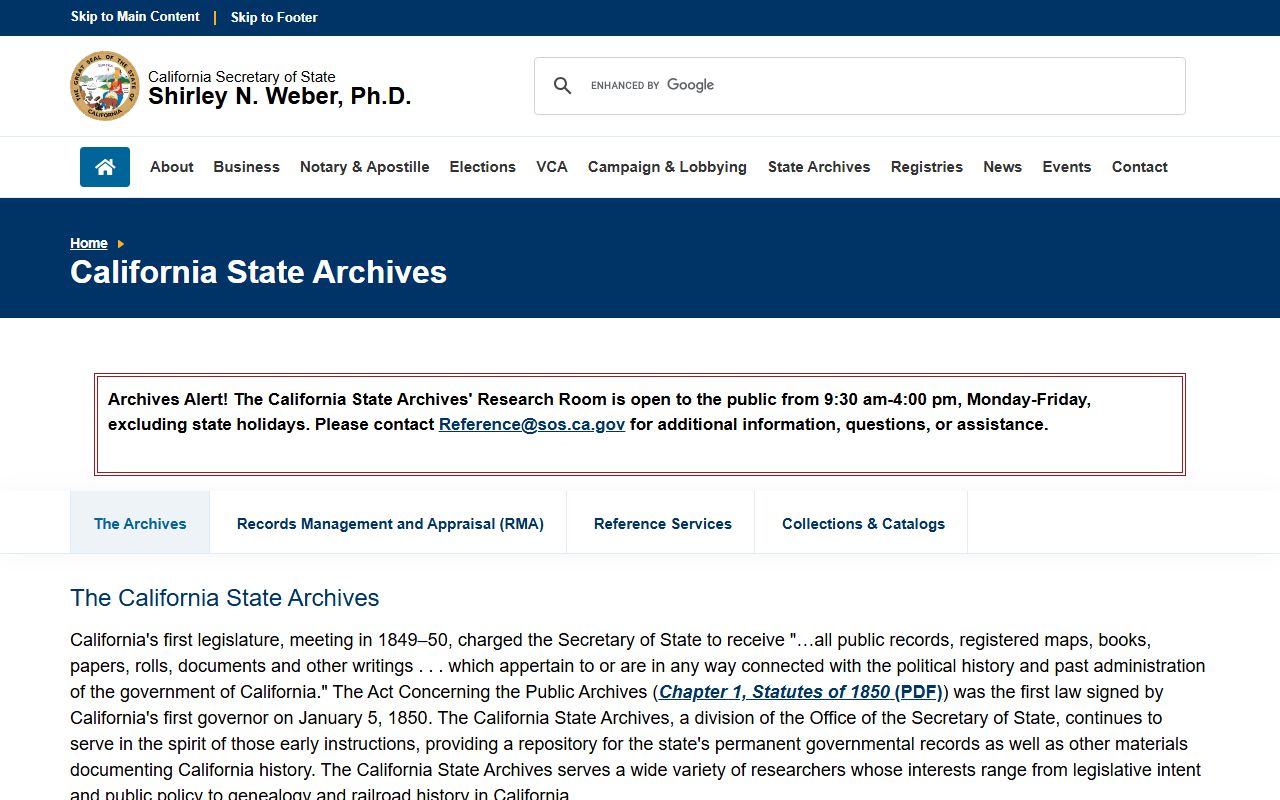
The State Archives at sos.ca.gov/archives holds millions of historical documents. Research room hours are 9:30 AM to 4:00 PM, Monday through Friday except state holidays. Staff can help with research requests by mail or email, though in-person visits offer the most access.
Note: State offices generally do not expedite requests or offer rush orders.
How to Get Records
Online searches are the easiest way to find Sacramento records. Many databases are free. You can search any time from home. Court indexes, business entities, property assessments, and CPRA portals all work online. Start here before going in person.
In-person visits work best when you need help or certified copies. Clerks can guide your search and answer procedure questions. Bring valid ID and payment for fees. Most offices take cash, check, or card. Call ahead for hours and required documents. Some offices need appointments.
Mail requests are good if you know exactly what you want. Write a letter with your name, address, and phone number. Describe the records clearly. Include case numbers or document details if you have them. Send payment if you know the cost. Otherwise ask for a quote. Processing takes longer by mail but saves you a trip.
Phone calls work for quick questions about procedures, hours, and fees. Staff cannot do research over the phone or give legal advice. Use phone to check office locations, confirm requirements, and ask about processing times. Follow up in writing if you need an official response.
Your Rights Under State Law
The California Public Records Act gives you the right to see most government records. Government Code sections 6250 and following require agencies to make public records available. Exemptions exist for privacy, investigations, legal advice, and other sensitive matters. The government must justify any denial with a specific legal reason.
Vital records follow stricter rules under Health and Safety Code Section 103526(c). Only eligible people can get birth and death certificates. This protects privacy while allowing family members and legal parties to access records they need. Marriage records have fewer restrictions but still require proof of eligibility in some cases.
Court records are governed by California Rules of Court. Rule 2.503 sets access standards for case files. Judges can seal files or redact sensitive information. Some case types have special privacy rules. Juvenile files are confidential. Family law cases protect child welfare information. Criminal cases may hide victim details to prevent harassment.
You must use public records lawfully. Do not use vital records for identity theft. Do not harass people with information from court files. Commercial use of some record types is banned. Follow the law when requesting and using government documents. Legitimate research, journalism, legal work, and personal use are fine.
Records in Other Cities
California has many large cities with their own record systems. Each city maintains different databases and uses different procedures. Check these pages for records in other major cities: