
Find Alameda County Public Records
Public records in Alameda County cover court cases, vital certificates, property deeds, and many other documents. You can search for birth and death records through the County Clerk-Recorder office. Court files go through the Superior Court system. Property documents are kept by the Recorder division. Business name filings also go on file with the county. Most searches can start online from home. Some records need an in-person visit to view or copy. Fees vary by type of record. Processing times range from instant online lookups to several weeks for certified copies mailed to you. The county serves over 1.6 million people across cities like Oakland, Fremont, and Berkeley.
Alameda County Quick Facts
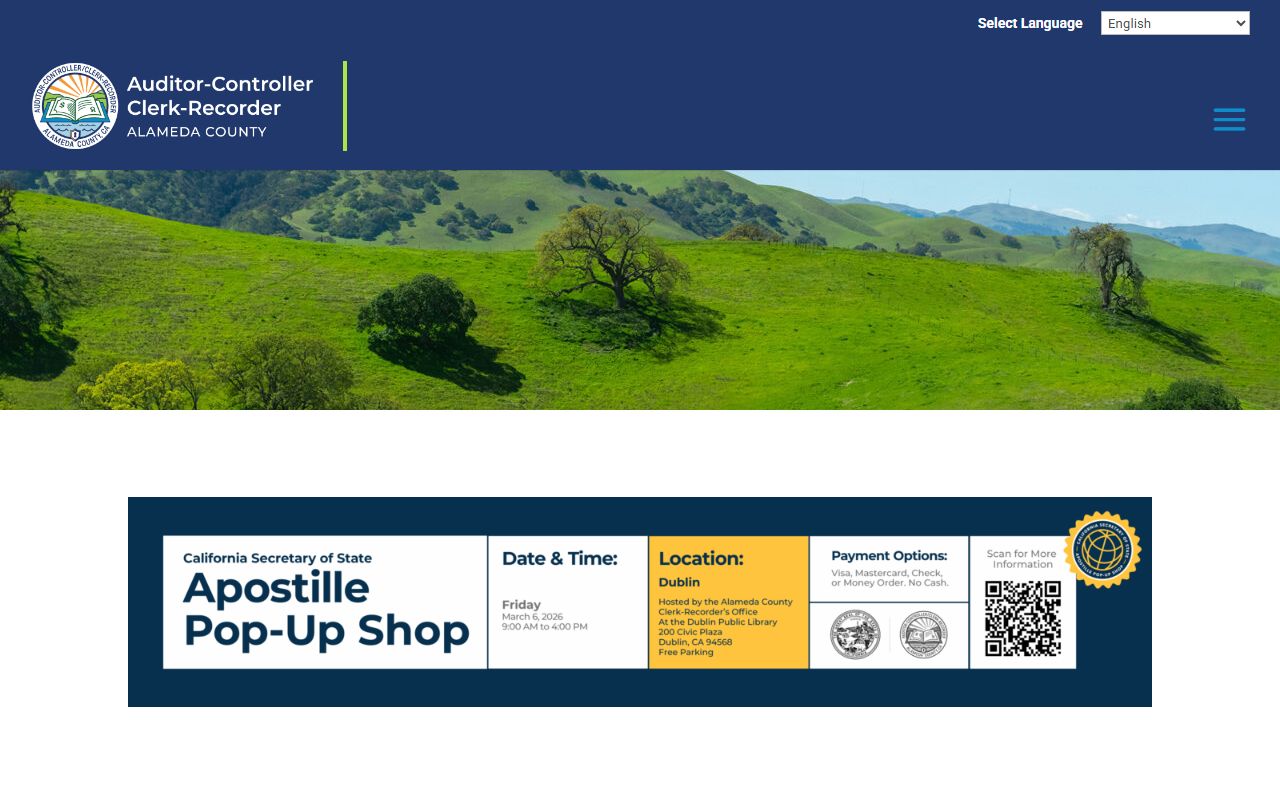
Alameda County Clerk-Recorder
The Clerk-Recorder office handles vital records, property documents, and business filings for Alameda County. This office keeps birth certificates, death certificates, and marriage records. They also record deeds, mortgages, and other real estate papers. Fictitious business names get filed here too. The main office sits in Oakland at 1106 Madison Street. Another location operates in Hayward at 224 West Winton Avenue for some services.
Visit acgov.org/auditor/clerk to find information about services and fees. You can order vital records online or by mail. Some property searches are available through the county website. Most recorded documents can be looked up by document number, book and page, or property address in Alameda County.
Birth certificates cost $24 per copy as of 2026. Death records also cost $24. Marriage certificates run $24 too. These prices follow state law under Assembly Bill 64. Only certain people can order vital records. You must prove your relationship to the person named on the certificate. Valid ID is required when you apply in person or by mail.
| Oakland Office | 1106 Madison Street, Oakland, CA 94607 |
|---|---|
| Hayward Office | 224 West Winton Avenue, Hayward, CA 94544 |
| Phone | (510) 272-6362 |
| Website | acgov.org/auditor/clerk |
Recorded documents are public records. Anyone can search property files. No reason is needed to look up a deed or lien. The Recorder division charges fees for copies. Plain copies cost less than certified ones. Digital files may be available by email for certain documents in Alameda County.
Court Records in Alameda County
The Superior Court of California, County of Alameda, handles all trial court cases. This includes civil suits, criminal prosecutions, family law, probate, and small claims. The court operates multiple locations. The main courthouse is at 1221 Oak Street in Oakland. Other branches serve Hayward, Fremont, Berkeley, and Pleasanton. Each location keeps files for cases heard there.
Records access information can be found at alameda.courts.ca.gov/general-information/records where the court explains how to search case files. Some records are available online. Others require a visit to the courthouse. Sensitive cases like juvenile matters remain confidential. Family law records may have limited access to protect privacy in Alameda County.
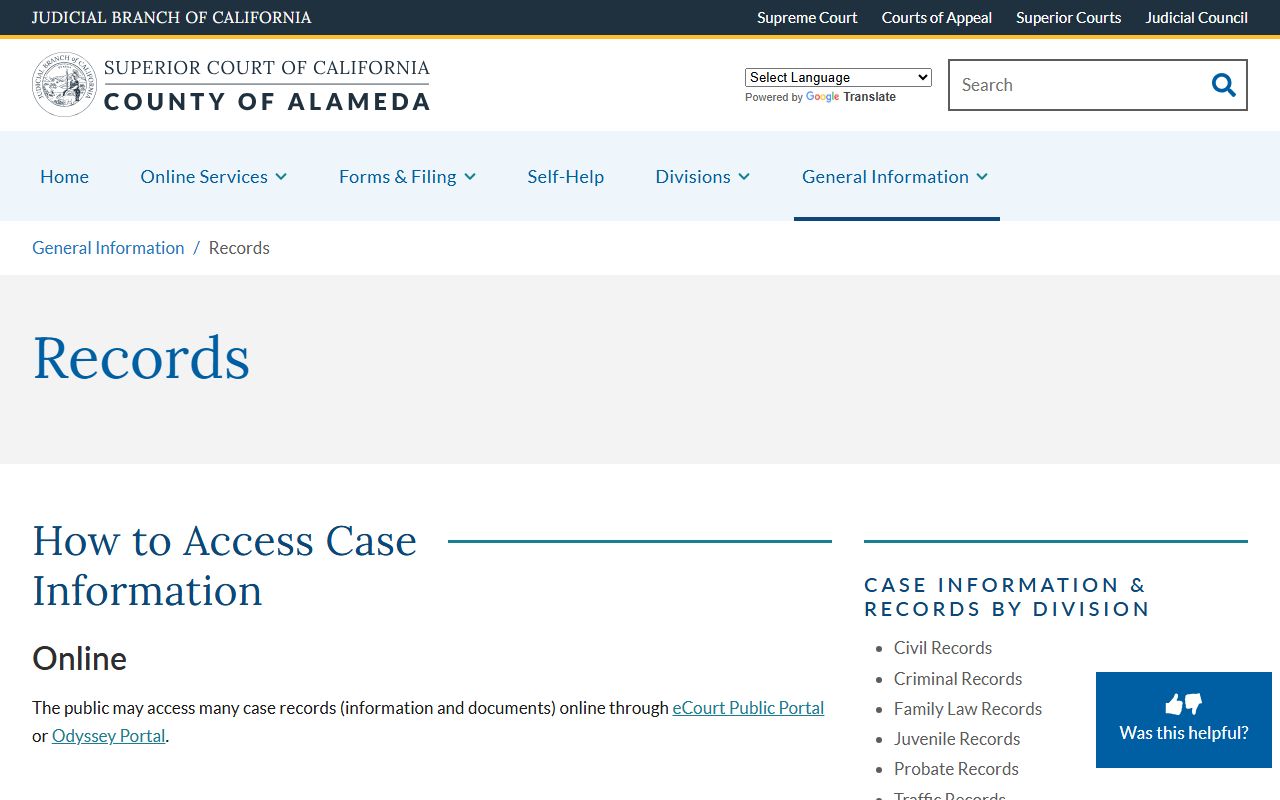
You can search online for civil and criminal cases. Enter a party name, case number, or other details. The system shows basic case information. This includes parties, filing dates, and case status. Full documents often require a courthouse visit. Clerks can help you locate files and order copies when you visit in person.
Fees apply for court records. Copies cost 50 cents per page under state law. Certification adds more to the price. Complex searches may take time if records are archived. Older cases might be stored off-site. Court staff can retrieve these but it takes longer than recent files.
Note: Electronic filing is available for attorneys and self-represented litigants in many case types.
CPRA Requests
Alameda County responds to California Public Records Act requests for government documents. Each county department maintains its own files. You must send your request to the right office. CPRA covers emails, reports, contracts, meeting minutes, and many other records created by county agencies.
The law gives agencies 10 days to respond. They can extend this by 14 days if needed. No reason is required for your request. Agencies can charge for copying costs and staff time on complex searches. Electronic records are often free or cheap to provide in Alameda County.
Some records are exempt from disclosure. Personnel files, active investigations, attorney work product, and trade secrets may be withheld. The agency must cite a specific legal exemption. You can challenge denials if you believe the law requires disclosure. Vital records, court files, and property documents are not requested through CPRA. These have separate procedures and fees.
Contact the specific county department that would maintain the records you seek. The Board of Supervisors office can help direct your request if you are unsure. Many departments have online forms or email addresses for CPRA submissions in Alameda County.
Birth, Death, Marriage Records
Vital records for events in Alameda County are available from the Clerk-Recorder. Birth certificates prove age and identity. Death certificates are needed for estates and benefits. Marriage records show legal unions. All three types are kept by the county for events within its jurisdiction.
Only authorized people can get certified copies. Parents can order their children's birth records. Adult children can get their parents' death certificates. Spouses have access to marriage records. You must show ID and prove your relationship. The county verifies eligibility before releasing documents in Alameda County.
Order by mail, online, or in person. Mail orders take longest but avoid extra fees. Online services may use third-party vendors that charge convenience fees. In-person orders give fastest service if the record is filed and available. Processing times vary based on how you order and how old the record is.
Birth records become available about 10 days after the event. Death records take longer to file. Marriage certificates are issued after the ceremony. If you order too soon, the record may not be in the system yet. The office will search and issue a no-record certificate if nothing is found. They keep your fee as a search charge.
Real Estate and Property Documents
Property records are maintained by the County Recorder in Alameda County. Deeds transfer ownership. Mortgages create liens. Reconveyances release loans. All these documents get recorded to provide public notice. Anyone can search property files. No ID or reason is needed.
Search by address, owner name, parcel number, or document details. The county has online search tools for some property data. You can find ownership information and recorded documents. Copies can be ordered for a fee. Certified copies cost more than plain ones.
Recording fees are set by state law. Pages, number of names, and document type affect cost. Most deeds cost under $100 to record. Copies cost a few dollars per page. Certification adds to the price for official copies in Alameda County.
The Assessor's Office keeps separate records about property values. Tax assessment data is public. You can look up assessed values, ownership, and property characteristics. This information helps with real estate research and appeals.
Business Filings and Name Statements
Fictitious business names are filed with the County Clerk in Alameda County. These statements show who operates under a business name. The law requires filing if you do business under any name besides your own legal name. Sole proprietors, partnerships, and some companies must file. Corporations usually do not need a fictitious name filing unless they use a different name than their corporate name.
Filings last five years. You must renew before expiration to keep using the name. New filings require publication in a local newspaper. This gives public notice of the business name. The county staff can explain filing procedures and fees when you apply in Alameda County.
Business entity filings for corporations, LLCs, and partnerships go to the California Secretary of State. These are state-level records, not county. Visit sos.ca.gov/business-programs/business-entities to search for business entities. The Secretary of State keeps articles of incorporation, operating agreements, and other formation documents at the state level.
How to Get Records
Multiple ways exist to access public records in Alameda County. Online searches work for many types. Court, recorder, and assessor portals let you search from home. Basic info is often free to view. Copies and certified documents cost money.
In-person visits give full access. Go to the office that keeps the records. Staff can help you search and copy. Bring ID for vital records. Be ready to pay fees. Cash, check, and cards are usually accepted at county offices in Alameda County.
Mail requests work if you know what you want. Write a clear letter. Include payment and your return address. Forms may be required for some record types. Check the website before mailing. Processing takes longer by mail but saves a trip to the office.
Phone calls answer basic questions. Staff can tell you hours, fees, and procedures. They cannot read records over the phone. Call ahead to confirm what you need to bring when you visit in Alameda County.
Laws Governing Access
California law controls public records access. The California Public Records Act appears in Government Code Division 10. This law gives you the right to inspect and copy government records. CPRA applies to all state and local agencies in California, including Alameda County departments.
Records are public unless exempt. Common exemptions include personnel files, active investigations, and attorney communications. Privacy protections also limit some records. The agency must cite a specific law to withhold documents. You can challenge improper denials through legal action or complaint to oversight bodies.
Court records follow California Rules of Court. Rule 2.503 covers courthouse access. Electronic access is addressed in Rule 2.540. Juvenile cases remain confidential. Some family law and mental health matters are sealed. The court can explain access rules for specific case types in Alameda County.
Vital records access comes from Health and Safety Code Section 103526. Only authorized persons can get certified copies. This protects privacy while allowing legitimate access. Property records are public by long tradition. Real estate documents have been open records for generations under California law.
Major Cities
Alameda County contains many incorporated cities. Each city government keeps its own records. City documents include council files, permits, and contracts. Most cities respond to CPRA requests for local records. County offices handle vital records and court cases regardless of which city you live in.
Cities in Alameda County with populations over 100,000: Oakland, Fremont, Hayward, Berkeley, Pleasanton
Smaller cities also maintain public records. Contact the city clerk for local government documents. County offices provide vital records, court files, and property documents for all cities within the county boundaries.
Nearby Counties
Alameda County borders several other counties. Records from other jurisdictions must be obtained from those counties. Each has its own offices and procedures.
Adjacent counties: Contra Costa County, Santa Clara County, San Joaquin County, Stanislaus County, San Mateo County