
Napa County Records Access
Public records in Napa County include court cases, vital certificates, property deeds, business filings, and government documents. The County Clerk-Recorder at 900 Coombs Street in Napa handles birth and death certificates, marriage licenses, and real estate recordings. Superior Court maintains case files for civil, criminal, family, and probate matters. Search many records online through county and court portals. Visit offices in person to view full files and order certified copies. Fees depend on record type and service level. Some searches are free while certified documents cost money. Processing times range from instant online results to weeks for mailed requests from Napa County offices.
Napa County Quick Facts
County Clerk-Recorder Office
The Napa County Clerk-Recorder manages vital records and property documents. This office records all deeds, mortgages, and liens affecting real estate in the county. They also issue certified copies of birth, death, and marriage certificates for events that occurred in Napa County. The office is at 900 Coombs Street in Napa. Walk-in hours are Monday through Friday from 8:00 AM to 5:00 PM. Call ahead if you need help finding a specific document or want to know what to bring.
Birth certificates cost $24 per copy. Death certificates cost $24. Marriage certificates are $24 too. These prices follow state law that changed in January 2026 under Assembly Bill 64. Rush service costs extra if you need records faster from Napa County.
| Address | 900 Coombs Street, Room 116, Napa, CA 94559 |
|---|---|
| Phone | (707) 253-4246 |
| Hours | Monday through Friday, 8:00 AM to 5:00 PM |
Only eligible people can order vital records. State law restricts access to protect privacy. Parents, spouses, children, grandparents, and legal representatives qualify. You must show valid photo ID when you apply. Mail orders need a copy of your ID included with the application to Napa County.
Vital records usually appear in the system within weeks of the event. Birth records take about two weeks. Death records can take eight weeks or more. Marriage records arrive after the officiant returns the signed license. If you order too soon, the search finds nothing and you get a Certificate of No Record. The county keeps your fee as a search charge under state law in Napa County.
Superior Court Case Files
Napa County Superior Court hears all case types including civil, criminal, family, and probate. The courthouse is located at 825 Brown Street in Napa. The clerk's office helps you search files and request copies of court documents from Napa County cases.
Some court records may be available online through the court's website or public access terminals. Basic information like case numbers, parties, and hearing dates often appears in online searches. Full documents require you to visit the courthouse or order copies by mail from Napa County.
Not all records are public. Juvenile cases are sealed by law. Family law cases may have hidden details to protect children and abuse victims. Criminal cases can include confidential reports. If the search finds nothing, the case might be sealed or filed in a different county, not Napa County.
Copy fees follow state law. Paper copies cost 50 cents per page. Certified copies add extra for the clerk's seal and signature. Ask about current prices when you order documents from Napa County courts.
Real Estate Documents
All property transactions in Napa County must be recorded with the County Clerk-Recorder. Deeds show ownership transfers. Mortgages secure loans against property. Liens protect creditors. These documents become public once recorded. Anyone can search and order copies from Napa County.
The recorder's office keeps these documents permanently. You can search by owner name, property address, or document number. The system shows when each document was recorded and gives you a reference number. Use that number to order copies if you need them for title searches or other purposes in Napa County.
Property records help with title searches, background checks, and genealogy research. They show who owned land over time. Loan documents reveal financing details. Foreclosure papers indicate defaults and sales. All this information is kept in Napa County archives going back to the county's formation.
The Assessor's Office maintains separate property tax records. These show the assessed value, owner's mailing address, and property characteristics. Search the assessor database to find current ownership and tax history. This office does not record new documents but tracks assessments for tax purposes in Napa County.
Birth, Death, and Marriage Certificates
Napa County issues vital records for events within its borders. If a child was born here, the birth record comes from the Clerk-Recorder. Death certificates issue after someone dies in this county. Marriage licenses are filed after the ceremony when the officiant returns the signed document to Napa County.
Order vital records in person, by mail, or through online services. In-person orders let you get same-day service if the record is ready. Mail orders take longer but avoid convenience fees. Online orders through third-party vendors like VitalChek add extra charges on top of the county fee for Napa County certificates.
You must prove your eligibility to get vital records. This protects privacy while allowing access to those with legitimate need. Bring ID and show your relationship to the person on the certificate. The clerk checks your eligibility before releasing certified copies from Napa County.
If the record is not yet filed, you will get a Certificate of No Record. The county keeps your payment as a search fee allowed by state law. Wait longer and try again if you know the event happened recently in Napa County.
State-Level Record Resources
Some public records are maintained at the state level rather than by Napa County. The California Department of Public Health keeps copies of vital records after they are recorded by counties. State archives hold historical documents. The Secretary of State maintains business entity filings and UCC statements.
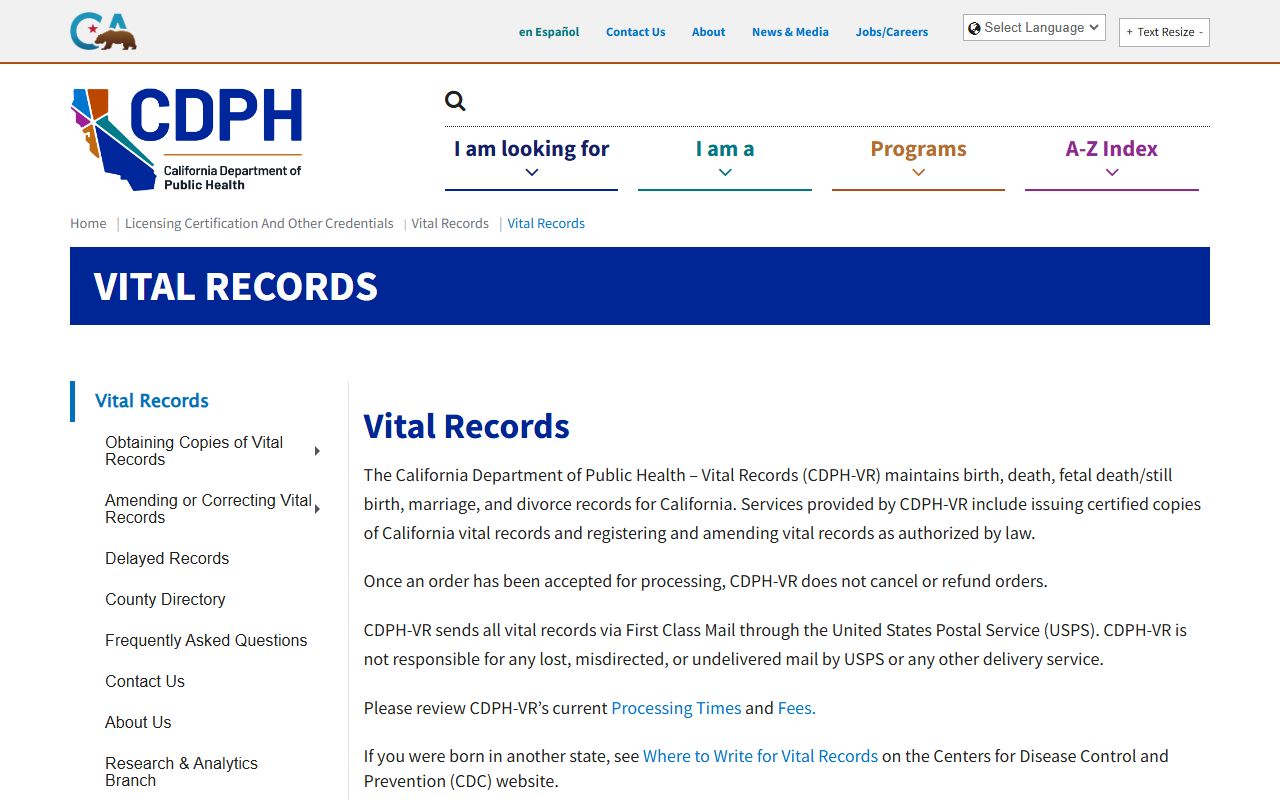
Visit cdph.ca.gov/Programs/CHSI/pages/vital-records.aspx to order vital records from the state office. This option works if you cannot visit the county in person. Processing takes 5 to 7 weeks, longer than ordering from Napa County directly.
The California State Archives at sos.ca.gov/archives holds historical government records from all counties. If you need very old documents that local offices cannot find, the state archives may have them. Research requests take 3 to 5 business days for state archives staff to complete.
Business entity records like corporations and LLCs are filed with the Secretary of State. Search at sos.ca.gov/business-programs/business-entities for company information. Fictitious business names, however, are still filed at the county level in Napa County.
Fictitious Business Names
Businesses using a name different from the owner's legal name must file a Fictitious Business Name Statement. This is called a DBA, which stands for "doing business as." The County Clerk-Recorder handles these filings for businesses in Napa County.
Filing a business name costs a fee set by the county. You must also publish the statement in a local newspaper. After publication, bring proof to the Clerk-Recorder to complete the process. Staff will give you a stamped copy showing the filing is complete in Napa County.
FBN statements must be renewed every five years to stay valid. Search the clerk's records to check if a business name is already in use. This prevents conflicts with existing businesses operating in Napa County.
CPRA Requests in Napa County
Napa County responds to public records requests under the California Public Records Act. This law gives you the right to inspect and copy most government documents. Each department handles requests for the records it maintains in Napa County.
Submit requests to the specific department that has what you need. Write a clear description of the records you want. Include dates if you know them. The law allows 10 days for the initial response. An extension of 14 days is possible for complex requests in Napa County.
No reason is required for your request. You do not have to explain why you want the records. The agency can charge for copying and staff time if your request takes many hours. Ask about fees before they start work. Some records are exempt, like personnel files and active investigations in Napa County.
Birth, death, and marriage records are not CPRA records. You get those through normal vital records procedures. Court cases follow different access rules. Other government documents like contracts, emails, and reports usually fall under CPRA in Napa County.
How to Obtain Records
Napa County offers several ways to get public records. Choose the method that works for your situation.
Online searches work for some court and property records. Use county and court websites to find basic information. Most searches are free. You pay when you order copies or certified documents from Napa County.
In-person visits work best for same-day service and viewing full files. Go to the courthouse for case files. Visit the Clerk-Recorder for property and vital records. Bring valid ID and payment. Staff will help you find records and make copies on site.
Mail requests are good if you live far from Napa. Write what you need, include payment, and send it to the right office. Processing takes longer but saves travel time. Check for current fees and addresses before mailing to Napa County.
Phone calls can answer basic questions about hours, fees, and requirements. Staff cannot read files to you over the phone. Call ahead to confirm details before visiting Napa County offices.
Legal Basis for Record Access
California law requires most government records to be public. The state constitution declares that public records shall be open to inspection. The Public Records Act in Government Code Division 10 sets procedures. These laws apply to Napa County and all other local agencies in California.
Court records follow California Rules of Court. Rule 2.503 says case files are public unless sealed or made confidential by law. Juvenile cases always stay sealed. Some family law and criminal records have restricted access to protect victims and children in Napa County cases.
Vital records access is controlled by Health and Safety Code Section 103526. This law lists who can get certified copies. The list includes parents, spouses, children, grandparents, and legal representatives. Unauthorized persons cannot get certified copies even with a CPRA request in Napa County.
Property records have been public since early California. Recording laws require documents to be filed in the county where property is located. Once recorded, they become public for anyone to see. This protects buyers and lenders by giving notice of claims against real estate in Napa County.
Cities in Napa County
Napa County includes several incorporated cities. The City of Napa is the county seat and largest city. Other cities include American Canyon, Calistoga, St. Helena, and Yountville. Each city runs its own government and keeps records about city operations. Contact the city clerk for local government documents.
Cities in Napa County with populations over 100,000: Napa
Note: Court cases and vital records go through county offices regardless of which city you live in within Napa County.
Bordering Counties
Napa County borders several other counties. If you need records from a neighboring jurisdiction, contact that county's offices directly.
Adjacent counties: Sonoma County, Solano County, Yolo County, Lake County