
Orange County Public Records
Public records in Orange County cover court files, birth and death certificates, marriage licenses, property deeds, and business names. The Clerk-Recorder office at 12 Civic Center Plaza in Santa Ana handles vital records and real estate documents. The Superior Court operates multiple courthouses across the county with case files going back decades. Online portals let you search court cases and property records from home. In-person visits give you full access to document images and certified copies. Most services charge fees that vary by record type. Processing times range from instant online results to several weeks for mail orders from Orange County offices.
Orange County Quick Facts
Clerk-Recorder Office
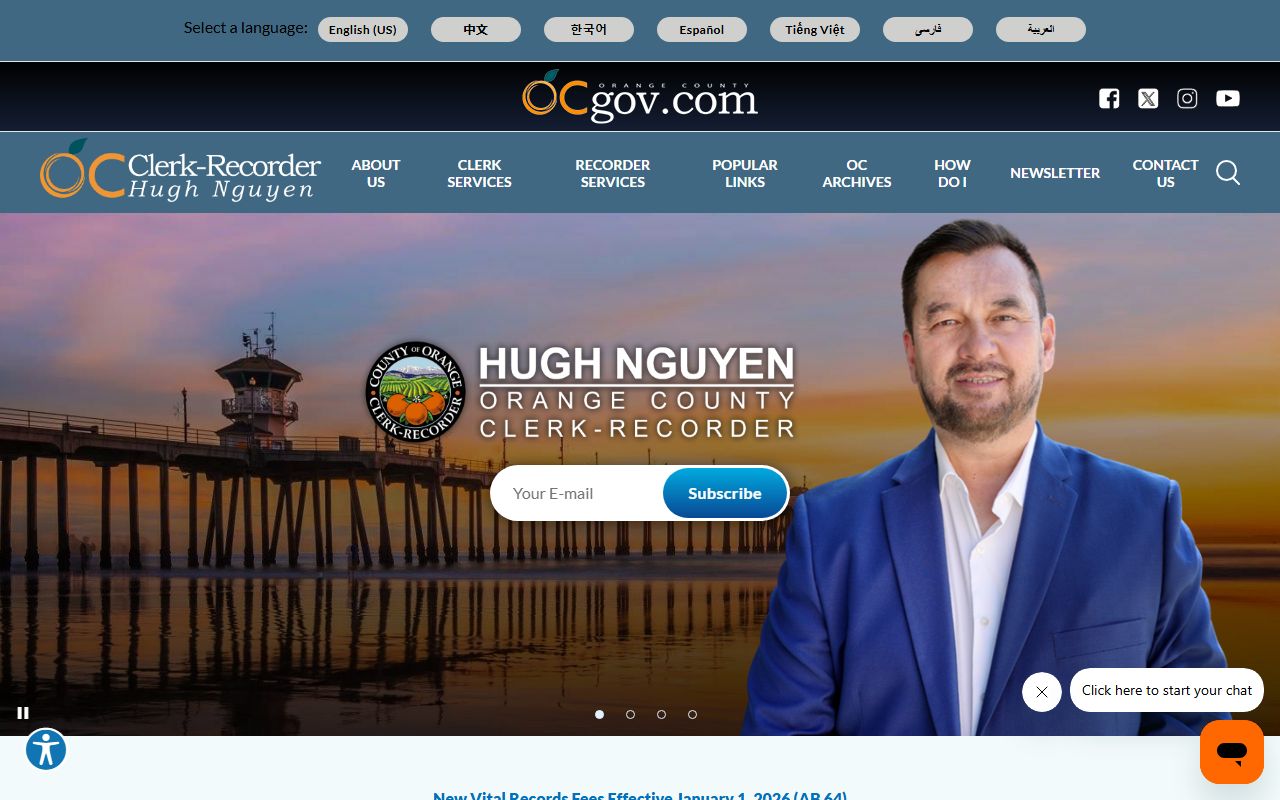
The Orange County Clerk-Recorder manages vital records and real estate documents. This office records deeds, mortgages, and liens that affect property. They also issue certified copies of birth, death, and marriage certificates for events in Orange County. The main office sits at 12 Civic Center Plaza in Santa Ana. Walk-in hours are Monday through Friday from 8:00 AM to 5:00 PM. Call ahead if you need help finding a specific document or understanding what ID to bring.
Search property records and vital certificates through ocrecorder.com to start your request online. The site shows how to order copies, what fees apply, and where to mail applications. Some records let you view images online for free. Others require you to order certified copies for a fee paid to Orange County.
Birth certificates cost $24 per copy. Death certificates also cost $24. Marriage certificates cost $24 too. These prices match state law and may change if the legislature passes new fees. Add extra costs for rush service or overnight delivery if you need records fast from Orange County offices.
| Address | 12 Civic Center Plaza, Santa Ana, CA 92701 |
|---|---|
| Phone | (714) 834-2500 |
| Hours | Monday through Friday, 8:00 AM to 5:00 PM |
| Website | ocrecorder.com |
Vital records are restricted by law. Only certain people can order them. Parents, spouses, children, and legal representatives qualify. You must show valid photo ID when you pick up records in person. Mail orders need a copy of your ID included with the application.
Court Case Records
Orange County Superior Court hears civil, criminal, family, probate, and small claims cases. Eight courthouses serve different areas of the county. The Central Justice Center in Santa Ana handles many case types and serves as the main courthouse. North Justice Center in Fullerton covers northern cities. West Justice Center in Westminster serves coastal and western communities. Each location has a clerk's office where you can search files and request copies of Orange County court documents.
Online case access is available at occourts.org/online-services/case-access for name searches and case number lookups. This free tool shows basic case information like filing date, case type, parties, and next hearing. It does not show full documents. You must visit the courthouse or order copies by mail to see pleadings, motions, and exhibits filed in Orange County cases.
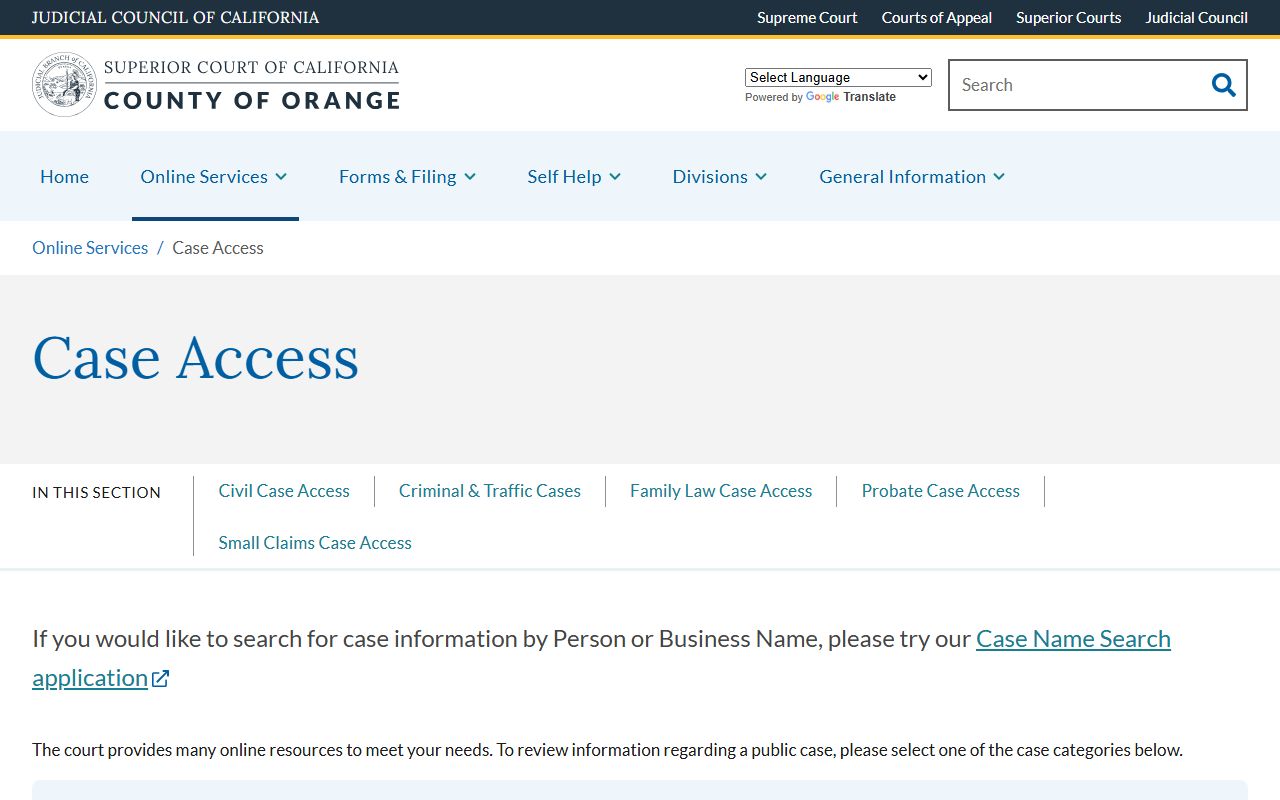
Not all records appear online. Juvenile cases stay sealed. Some family law details are hidden to protect privacy. Criminal cases may have confidential reports. If you do not find what you need online, contact the courthouse where the case was filed. Staff can tell you if the record exists and how to get copies in Orange County.
Copy fees are set by state law. Paper copies cost 50 cents per page. Certified copies cost an additional fee for the clerk's signature and seal. Electronic copies may be available at lower cost. Ask the clerk about current prices before ordering documents from Orange County courts.
Real Estate and Property Records
All property transactions in Orange County get recorded with the Clerk-Recorder. Deeds transfer ownership. Mortgages secure loans. Liens protect creditors. These documents become public once recorded. Anyone can search and order copies.
The recorder's website has a search tool for finding documents by name, address, or parcel number. You can see when documents were recorded and their reference numbers. Some systems show images of the actual recorded pages. Others require you to request copies for a fee paid to Orange County.
Property records help with title searches, background checks, and genealogy research. They show the chain of ownership for land and buildings. Loan documents reveal financing details. Foreclosure papers indicate defaults and sales. All this information is kept in Orange County archives going back many decades.
The Assessor's Office maintains separate property tax records. These show the assessed value, owner's mailing address, and property characteristics. Search the assessor's database to find current ownership and tax history. This office does not record new documents but keeps track of assessments for tax purposes in Orange County.
Birth, Death, and Marriage Documents
Orange County issues vital records for events within its borders. If a child was born in a hospital here, the birth record comes from the Clerk-Recorder. Death certificates issue after someone dies in this county. Marriage licenses are filed after the ceremony takes place and the officiant returns the signed document to Orange County.
Order vital records online, by mail, or in person. Online orders may use a third-party service called VitalChek. This company charges convenience fees on top of the county price. Mail orders save the extra fee but take longer. In-person orders let you walk out with the certificate if it is available that day in Orange County.
Birth records usually appear in the system within two weeks of the event. Death records take about eight weeks to file. Marriage records arrive after the officiant mails the license back to the county. If you order too soon, the search will find nothing and you will get a Certificate of No Record. The county keeps your fee as a search charge allowed by state law.
Only eligible people can order vital records. This protects privacy while allowing access to those with direct need. Bring ID and proof of your relationship to the person on the certificate. The clerk checks your eligibility before releasing certified copies from Orange County offices.
California Public Records Act Requests
Orange County government responds to public records requests under state law. The California Public Records Act gives you the right to inspect and copy most government documents. Each department handles its own records and responds to requests for the files it maintains.
Submit CPRA requests through the county portal at orangecounty.nextrequest.com to reach most departments. This online system tracks your request and sends you updates. You will get a confirmation email when the county receives your submission. The law allows 10 days for the initial response. An extension of 14 days is possible if the request is complex or requires searching many files in Orange County.
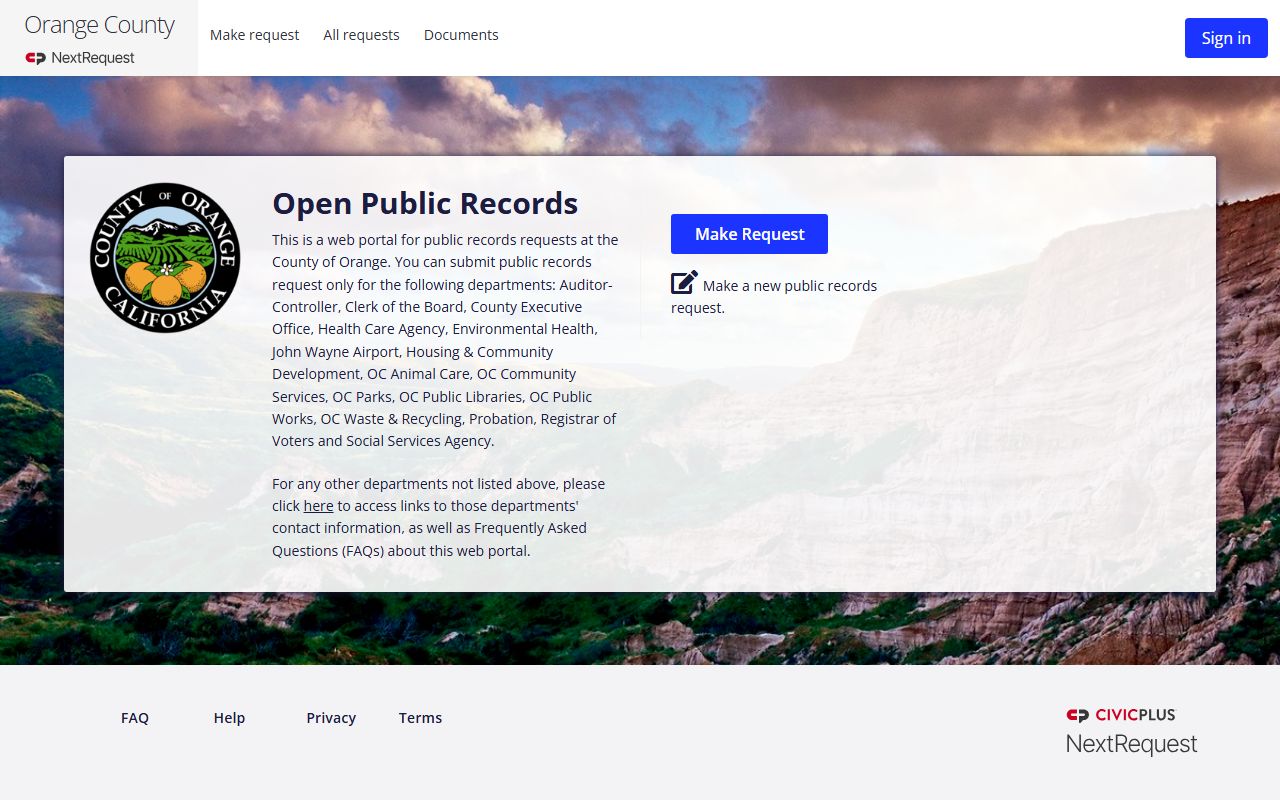
No reason is required for your request. You do not have to explain why you want the records. You also do not need to show ID for most CPRA requests. The agency can charge for copying costs and staff time if your request takes many hours to fulfill. Ask about fees before the county does the work in Orange County.
Some records are not subject to CPRA. Exemptions include personnel files, active investigations, attorney work product, and documents protected by other laws. Birth, death, and marriage records are not CPRA records either. You get those through normal vital records procedures. The county must cite a legal exemption if it denies access to other documents you request from Orange County.
Ways to Obtain Records
Several methods work for getting public records in Orange County. Pick the one that fits your needs and timeline.
Online searches give you instant results for many record types. Court cases, property records, and some vital statistics appear in web databases. You can search for free and view basic details. Ordering copies costs extra. The clerk or recorder will mail them or let you download files depending on the record type in Orange County.
In-person visits work best when you need to see full files or get same-day service. Go to the courthouse to examine complete case files. Visit the Clerk-Recorder office to look at recorded documents. Bring cash or cards to pay fees. Staff will help you find what you need and make copies on the spot.
Mail requests are good if you live far away and know exactly what you want. Write a letter describing the record. Include payment for fees. Send it to the right office. Processing takes longer by mail, but it saves travel time. Check the website for current fees and mail addresses before sending your request to Orange County.
Phone calls answer basic questions. Staff cannot read files over the phone. They can tell you office hours, fees, ID requirements, and search tips. Call ahead to confirm details before visiting Orange County offices in person.
Legal Basis for Record Access
Multiple laws govern public records access in California. The state constitution declares that public records shall be open to inspection. The Public Records Act, now found in Government Code Division 10, sets the procedures. It applies to all state and local agencies including Orange County departments and offices.
Court records follow different rules. California Rules of Court establish access policies for case files. Rule 2.503 says court records are presumed public unless sealed by court order or made confidential by law. Juvenile cases are always confidential. Certain family law and criminal records have restricted access to protect victims and children involved in Orange County cases.
Vital records access is controlled by Health and Safety Code Section 103526. This law lists who can get certified copies of birth, death, and marriage documents. The list includes registrants, parents, spouses, children, grandparents, and legal representatives. Unauthorized persons cannot get certified copies even if they make a CPRA request to Orange County.
Property records have been public since early California history. Recording laws require documents to be filed in the county where the property sits. Once recorded, they become public record available to anyone. This protects buyers and lenders by giving notice of claims against real estate in Orange County.
Major Cities in Orange County
Orange County contains many incorporated cities. Each city runs its own government and keeps separate records about city operations. City records include council meetings, permits, contracts, police reports, and department files. Most cities handle CPRA requests through their own portals or clerks' offices for local government documents.
Cities in Orange County with populations over 100,000: Santa Ana, Anaheim, Irvine, Huntington Beach, Garden Grove, Orange, Fullerton
Note: Court cases and vital records go through county offices regardless of which city you live in within Orange County.
Adjacent Counties
Orange County shares borders with other counties in Southern California. If you need records from a neighboring jurisdiction, contact that county's offices directly.
Bordering counties: Los Angeles County, San Bernardino County, Riverside County, San Diego County