
Access San Diego County Records
San Diego County public records are kept by various county departments serving over three million residents. The Assessor/Recorder/County Clerk handles vital records like birth and death certificates, property documents, and marriage licenses. Superior Court maintains case files for civil, criminal, family, probate, and small claims matters. Many records can be searched online through county portals. Others require in-person visits or mail requests. Birth certificates cost $24 when ordered from the county. Property records are free to search but copies have fees. The California Public Records Act gives you the right to request documents from county agencies with a 10-day response time. San Diego County is the second most populous county in California. Each office operates independently with its own hours, procedures, and fee schedules for public records access.
San Diego County Quick Facts
Assessor, Recorder, and County Clerk
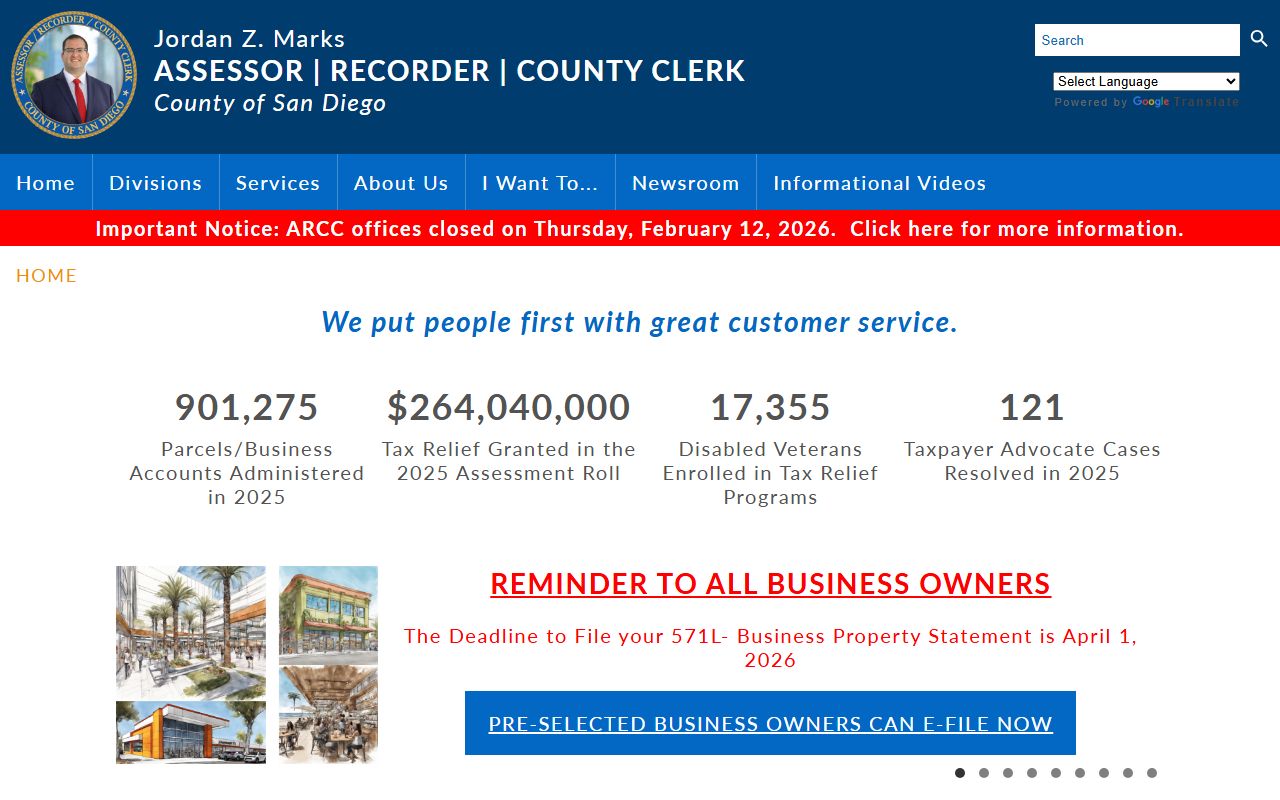
The Assessor/Recorder/County Clerk (ARCC) combines three functions under one department in San Diego County. As Assessor, they value property for tax purposes. As Recorder, they maintain recorded documents like deeds and liens. As County Clerk, they issue marriage licenses and keep vital records. The main office is at 1600 Pacific Highway in San Diego. Branch offices serve other areas of the county.
Visit arcc.sdcounty.ca.gov for services and information. The website has links to online searches, forms, and fee schedules. Hours vary by location. Most offices are open Monday through Friday. Some services can be done online. Others require in-person visits or mail requests in San Diego County.
Staff can answer questions about procedures and fees. They cannot provide legal advice. Bring valid ID when requesting vital records or sensitive documents. Payment methods include cash, check, and credit card at most locations.
| Main Office | 1600 Pacific Highway, San Diego, CA 92101 |
|---|---|
| Website | arcc.sdcounty.ca.gov |
| Hours | Monday through Friday, 8:00 AM to 5:00 PM (varies by location) |
Birth, Death, and Marriage Records
San Diego County issues certified copies of vital records for events that occurred within the county. Birth certificates cost $24 per copy. Death certificates cost $24 per copy. Marriage certificates cost $24 per copy. These county fees are lower than ordering from the state office in Sacramento.
Not everyone can order vital records. State law restricts access to protect privacy. Parents can get their child's birth certificate. Adult children can get their parents' death certificate. Spouses can get marriage certificates. You must show ID and prove your relationship to the person on the record before the county will release a certified copy.
Birth records become available about 10 days after birth. Death records take longer because medical personnel must complete the certificate. If you order too soon, the record may not be filed yet. The office will search and issue a Certificate of No Public Record if nothing is found. They keep the fee as a search charge authorized by state law.
Order vital records in person at ARCC offices. You can also request by mail. Online ordering is available through VitalChek, which adds service fees. The county website has order forms and instructions for San Diego County residents.
Health and Safety Code Section 103526 lists who can access vital records. This protects individual privacy while allowing legitimate access.
Superior Court Records
The San Diego County Superior Court operates courthouses across the county. The Central Courthouse is at 1100 Union Street in downtown San Diego. Other locations serve North County, South Bay, East County, and outlying areas. Court records include civil, criminal, family law, probate, and small claims cases. The clerk maintains files at each courthouse.
Court records can be accessed through the court website at sdcourt.ca.gov. Online case search lets you find case numbers, party names, and basic case information. Full documents often require a courthouse visit in San Diego County.
The court provides information about accessing records at sdcourt.ca.gov.
Copies of court documents cost $0.50 per page. Certification adds an extra fee. Request copies from the clerk at the courthouse where the case was filed. Some documents are available electronically. Others exist only on paper and must be retrieved from storage.
Certain case types are confidential. Juvenile dependency and delinquency cases are not public. Sealed records require a court order to access. Family law cases have limited online information to protect the privacy of parties and minor children involved in the proceedings.
Note: California Rule of Court 2.503 governs public access to case records at the courthouse.
Property and Real Estate Documents
Property records are maintained by the County Recorder. When real estate changes hands, the new deed gets recorded. This creates a public record of ownership. Mortgages, liens, easements, and other documents affecting property also get recorded. These form a complete chain of title for every parcel in San Diego County.
You can search property records for free online. The Recorder's database lets you search by address, parcel number, or document number. Many documents are available as digital images. You can view them from home without visiting an office. Newer records are online. Older records may require an in-person search.
Copies of recorded documents cost money. The fee is per page. Plain copies are cheaper than certified copies. Certification proves the copy matches the original on file. Most real estate transactions require certified copies. Order at a Recorder office or request by mail in San Diego County.
The Assessor keeps separate property records for tax purposes. Assessed values and property characteristics are public information. Search the Assessor database to find ownership details and tax history. This is useful for research but not for legal purposes.
- Grant deeds transfer ownership from seller to buyer
- Deeds of trust secure loans with real property
- Mechanic's liens are filed by contractors for unpaid work
- Tax liens attach when property taxes go unpaid
- Easements grant rights to use land for utilities or access
All recorded documents are public records. Anyone can search and copy them without giving a reason or showing special permission.
Fictitious Business Name Statements
When you do business under a name other than your legal name, you must file a fictitious business name statement with the County Clerk. This is also called a DBA (doing business as). The fee covers filing with the county and publishing in a newspaper as required by California law.
Fictitious business name statements are public records. You can search them at the Clerk's office. This lets you check if a name is already in use before you file. Statements are valid for five years. You must renew before expiration to continue using the name legally in San Diego County.
If you change the business address or add partners, you may need to file a new statement. When you stop using a fictitious name, you should file an abandonment to remove it from active records.
Public Records Act Requests
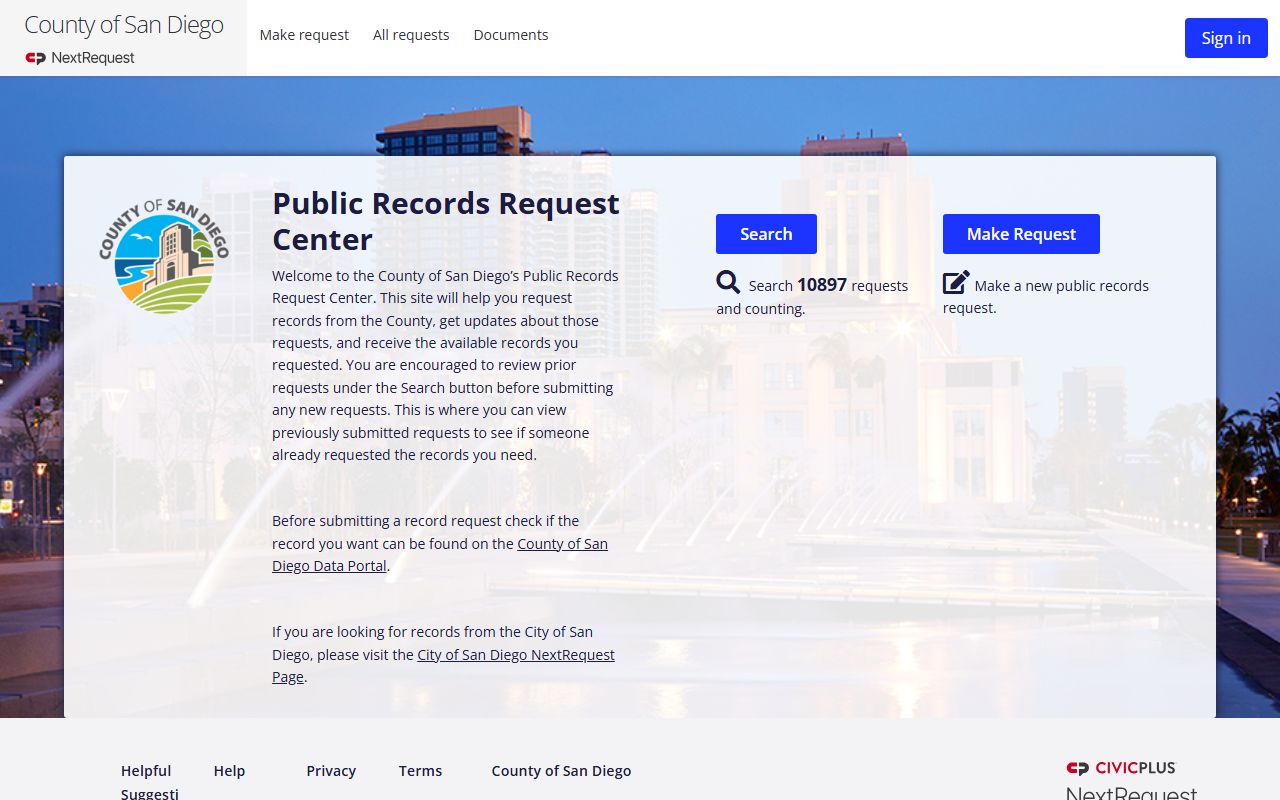
San Diego County responds to public records requests under the California Public Records Act. Each department maintains its own files. You must contact the department that would have the records you seek. Be specific in your request. Describe the documents by date, subject, or type to help staff locate them.
San Diego County uses an online portal for CPRA requests at pra.sandiegocounty.gov. Fill out the form with details about what you are seeking. The system tracks your request and sends updates as it is processed.
The law gives agencies 10 days to respond. They can extend by 14 days if they need more time to locate or review records. Complex requests may take longer. Simple requests are often answered quickly in San Diego County.
You do not need to give a reason for your request. No ID is required for most records. Fees may apply for copying and staff time if the request is extensive. Electronic records are often provided at no cost or minimal fees. Paper copies cost more.
Some records are exempt from disclosure. Personnel files, attorney work product, and active investigations are examples. The agency must cite a specific legal exemption to withhold records. You can challenge a denial if you believe it is improper.
How to Get Records
Online searches are available for many record types. The court, recorder, and assessor all have web portals. These let you search from home. Basic information is free. You pay only for copies or certified documents.
In-person visits give you the most complete access. You can view full files and order copies on the spot. Bring ID and payment. Staff can help you locate records and explain procedures. Ask about fees before ordering in San Diego County.
Mail requests work if you know exactly what you want. Write a clear letter describing the records. Include payment and your return address. Processing takes longer by mail than in person. Some offices have request forms you can download from their websites.
Phone calls can answer basic questions about hours, fees, and procedures. Staff will not read documents to you over the phone. They can explain how to request records and what you need to bring. Call ahead to confirm requirements before visiting.
Fees for Records
Fees vary by record type. Birth and death certificates cost $24 from the County Clerk. Court copies are $0.50 per page. Property document copies have per-page fees plus certification if needed. Some searches are free. Copies cost money. Electronic delivery may be cheaper than paper. Rush service adds extra charges.
Payment methods include cash, check, money order, and credit card at most offices. Some locations may not accept all payment types. Check the website or call ahead to confirm what forms of payment are accepted in San Diego County.
Note: Fees can change when the state legislature passes new laws or when county officials adjust local rates.
Laws Governing Records
The California Public Records Act is in Government Code Division 10. It applies to all state and local agencies. Records are presumed public unless an exemption applies. The burden is on the agency to justify withholding records.
Court records follow California Rules of Court. Rule 2.503 covers case records available at the courthouse. Rule 2.540 addresses government agency access to electronic files. Some case types are sealed by law. Juvenile cases are confidential under Welfare and Institutions Code provisions.
Vital records access is controlled by Health and Safety Code Section 103526. Only authorized persons can obtain certified copies. This balances public access with individual privacy protection for families and individuals.
Property records have long been public under common law and statute. Anyone can search and copy recorded documents without showing special need or permission in San Diego County.
Cities in San Diego County
San Diego County includes 18 incorporated cities. Each city government maintains its own records separate from county records. City records include council minutes, permits, contracts, and departmental files. Most cities have online portals for public records requests about local government operations.
Major cities in San Diego County with populations over 100,000: San Diego, Chula Vista, Oceanside, Escondido, Carlsbad, El Cajon
Note: Court cases and vital records go through county offices regardless of which city you live in within San Diego County.
Nearby Counties
San Diego County borders several other counties and Mexico. If you need records from a neighboring jurisdiction, contact that county directly. Each has its own record systems and procedures.
Adjacent counties: Orange County, Riverside County, Imperial County